


The Accounting Process of Businesses Selling Online Abroad


What Is Selling Abroad Online (E-Export)?
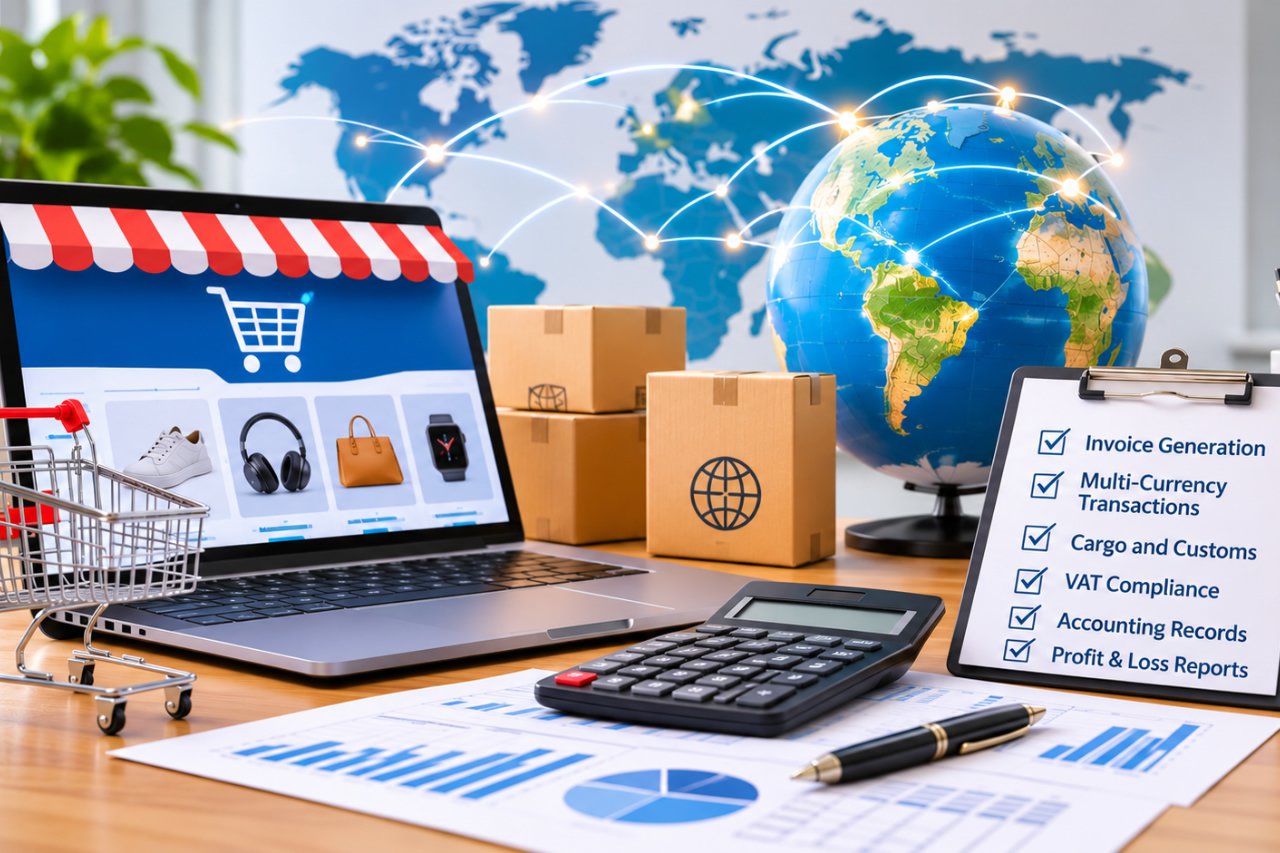
Selling abroad online refers to businesses offering their products or services to customers in different countries through digital platforms. This sales model, known as e-export, enables businesses to reach international markets and expand their customer base. Businesses can sell abroad through their own e-commerce websites or international online marketplaces. Since these transactions are carried out in different currencies, foreign exchange movements, collections, and payment transactions must be accurately monitored during accounting processes.
How Does the Accounting Process Work for Businesses Selling Abroad?
The accounting process for businesses selling abroad consists of several stages, from receiving an order to collecting payment. During this process, the sales transaction is first documented, the relevant invoice is then issued, and the sales amount is transferred to the accounting records. Expenses such as shipping, customs, marketplace commissions, and payment service provider deductions must also be tracked separately. Proper management of the accounting process enables businesses to control their income and expenses and fulfill their tax obligations on time.
The Importance of Using Accounting Software for International Sales
Manually tracking accounting processes can lead to time loss and an increased risk of errors for businesses selling products online internationally. As the number of orders increases, managing foreign currency transactions, invoices, collections, and expenses in an organized manner becomes more difficult. At this point, ERP and accounting software provide significant convenience for businesses.
Thanks to accounting and ERP software:
International sales invoices can be tracked.
Transactions carried out in different currencies can be recorded.
Order and payment information can be monitored.
Shipping and marketplace expenses can be tracked.
Stock and product movements can be managed.
Income, expense, and profitability reports can be generated.
These systems help businesses manage their accounting processes more systematically and monitor their financial data through a single platform.
What Should Be Considered in Accounting When Selling Products Online Abroad?
Certain important points must be taken into consideration to ensure that accounting transactions are carried out correctly in international e-commerce activities.
An invoice must be issued for every sale in compliance with applicable legislation.
The correct exchange rate must be used for foreign currency transactions.
ETGB and export documents must be retained.
Shipping, commission, and payment service provider expenses must be recorded.
Returns and cancellations must be reflected in accounting records.
VAT exemption requirements must be evaluated correctly.
Tax returns must be submitted within the legal deadlines.
Regularly monitoring these transactions helps businesses maintain accurate financial records and prevent potential tax errors.
How Are Invoices Issued for International Sales?
For sales made online to customers abroad, an invoice must be issued in accordance with the nature of the transaction. For product sales, it is important that information such as the buyer's details, product description, sales amount, and currency is accurately included in the invoice. For shipments carried out within the scope of [the relevant export procedure], the ETGB (Electronic Commerce Customs Declaration) process must also be taken into consideration. Whether the business is subject to e-Invoice or e-Archive Invoice requirements and which customs procedure is used for the export affect the type of document to be issued. Therefore, it should not be assumed that the same invoicing method will apply to every international sale.
How Are Micro Export and ETGB Used in the Accounting Process?
Micro-export is a simplified export method that allows products within certain weight and value limits to be shipped abroad through authorized postal and express cargo companies. Under this method, customs procedures are carried out by an authorized cargo or postal operator through the Electronic Commerce Customs Declaration (ETGB). From an accounting perspective, ETGB is one of the important documents proving that the export transaction has taken place. Businesses must match their sales invoices with ETGB records and retain these documents together with their accounting records. The applicable weight and value limits for micro-exports must be checked in accordance with current legislation.
How Is VAT Applied to International Sales?
VAT treatment for international sales is evaluated according to whether the transaction involves an export of goods or an export of services. Deliveries of goods made from Türkiye to a customer abroad that meet the export requirements are exempt from VAT. However, to benefit from this exemption, legal requirements must be fulfilled, such as delivering the product to the customer abroad and ensuring that it leaves the Turkish Customs Territory. For service exports, the service must be performed for a customer abroad and utilized outside Türkiye. Therefore, businesses should not automatically consider every international sale as eligible for VAT exemption.
How Are Foreign Currency Sales Recorded in Accounting?
Businesses selling abroad generally receive payments in US dollars, euros, or other foreign currencies. Therefore, the applicable exchange rate on the transaction date must be taken into account when recording foreign currency transactions in accounting. The Turkish lira equivalent of the sales amount is transferred to the accounting records. When payment is collected at a later date, a difference may arise between the exchange rate at the time of collection and the rate used in the original accounting entry. Depending on the nature of the transaction and the relevant accounting period, this difference may be recognized as a foreign exchange gain or loss. Accurately recording foreign currency transactions is important for businesses to monitor their actual income and financial position.
Collection and Accounting of International Payments
In international online sales, payments can be received through bank transfers, credit cards, virtual POS systems, or international payment service providers. Payment service providers may deduct commissions and transaction fees from the collected amount. Therefore, businesses must track the order amount and the net amount transferred to their bank accounts separately. For example, when a business makes a sale of 100 euros to a customer abroad and the payment service provider deducts a commission of 5 euros, 95 euros may be transferred to the business's bank account. In this case, the 100 euros in sales revenue, the 5 euros in commission expenses, and the 95 euros in collected payments must be recorded separately in the accounting records.
How Are Shipping, Customs, and Marketplace Commissions Recorded in Accounting?
Businesses selling abroad must record not only their product sales revenue but also the expenses incurred during the sales process.
These expenses may include:
International shipping and transportation fees
Customs clearance and processing costs
E-commerce platform commissions
Payment service provider fees
Packaging and logistics expenses
Return and product shipping costs
Recording these expenses in accounting with appropriate supporting documents makes it easier for businesses to calculate their actual sales costs and profitability.
How Are Returns and Cancellations Managed in International Sales?
Customers may return products or cancel their orders in international online sales. In such cases, previously issued sales documents and accounting records must be corrected in accordance with the relevant legislation. It is important to return the product to stock, adjust the sales amount, and record the refund made to the customer. In addition, return-related deductions arising from international shipping companies and payment service providers must also be included in expense tracking.
What Are the Tax Obligations of Businesses Selling Abroad?
Businesses selling products online to customers abroad must fulfill their obligations in accordance with the tax legislation in force in Türkiye. Depending on the legal structure and type of activity of the business, corporate income tax, personal income tax, VAT returns, and other statutory declarations may apply. For export transactions carried out under VAT exemption, the relevant documents must also be issued, and the exemption must be declared in accordance with legal requirements. In addition, potential VAT, GST, or similar indirect tax obligations that may arise in the countries where the business sells its products must also be evaluated separately.
Conclusion
The accounting process for businesses selling products online abroad is not limited to issuing sales invoices. Foreign currency transactions, payment collections, export documents, VAT applications, shipping expenses, and tax obligations must be evaluated as a whole. Properly managing accounting processes is particularly important for businesses operating on international marketplaces in terms of financial control and sustainable growth. Supporting these processes with ERP and accounting software helps businesses reduce their operational workload and establish a more efficient working structure.
Subscribe to Bayiloji
Don't miss updates, tips and special deals in the world of dealership.